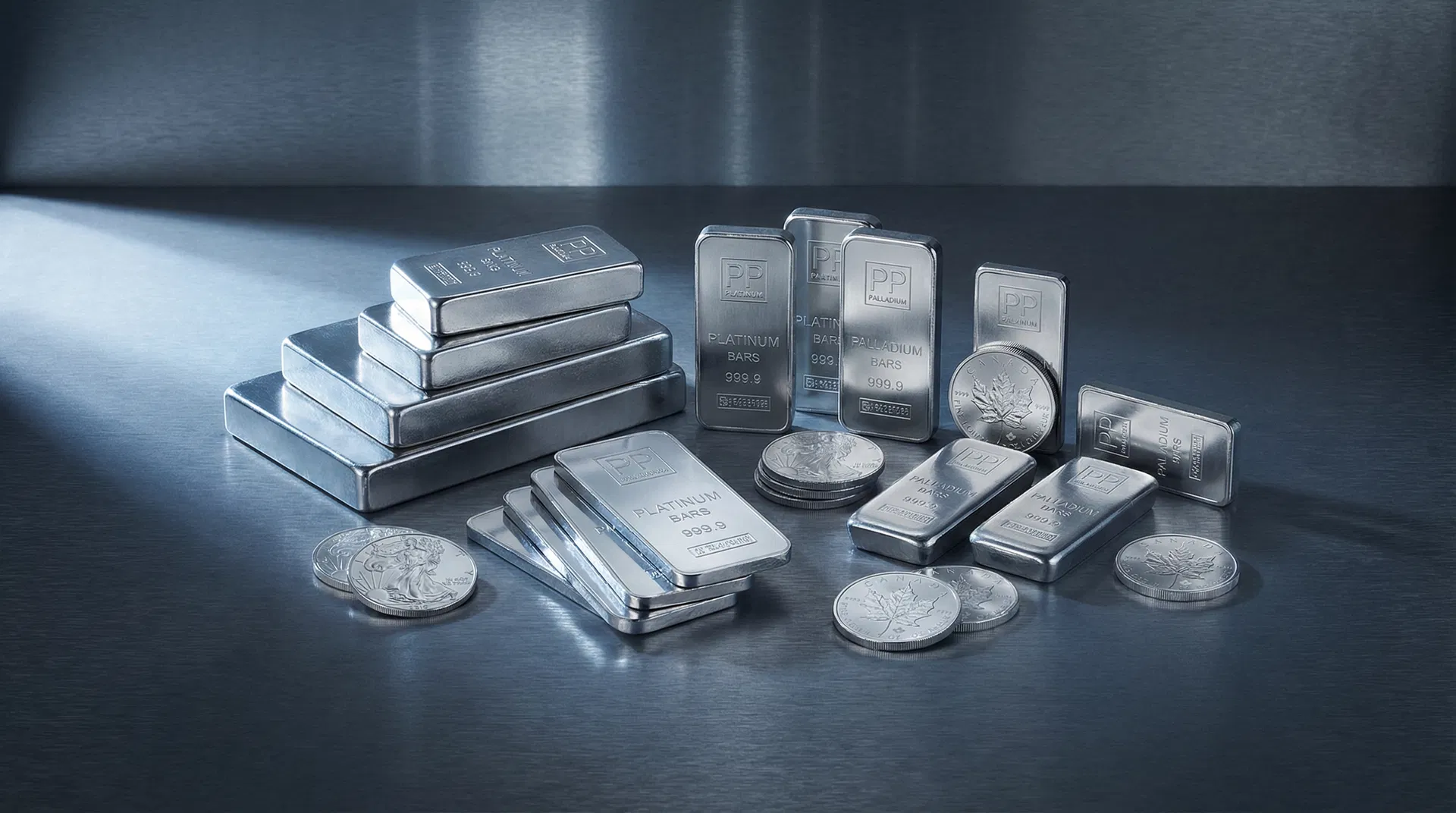
Platinum costs roughly $950 per ounce while silver trades around $30. That 30x price gap reveals fundamental differences in industrial demand, supply chains, and investment strategy that every precious metals buyer needs to understand.
Both metals shine with that classic white luster and hedge against inflation. The similarities end there. One metal powers the hydrogen economy and commands premiums for scarcity. The other drives solar energy and electronics with an abundant, affordable supply.
At American Standard Gold, we help investors and collectors make informed decisions about precious metals. In this guide, we’ll break down the key differences between platinum and silver, exploring their unique properties, how to identify them, and how each performs in today’s precious metals market.
70% from South Africa
Mined globally as a byproduct
Hydrogen fuel cells, catalytic converters
Solar panels, electronics
Lower (smaller market)
Higher (larger market)
Price Gap: Why Platinum Costs 30 Times More Than Silver
The price difference between platinum and silver comes from 3 main factors.
First, platinum isapproximately 15 times rarer than goldand over 100 times scarcer than silver. Global platinum production reaches only 190 metric tons annually compared to silver's 25,000 metric tons. That scarcity alone justifies a premium.
Second, geographic concentration drives platinum prices higher. Nearly 70% of all platinum comes from South Africa, with Russia providing another 12%. Political instability, labor strikes, or energy crises in these regions immediately impact global supply. Silver mines operate across dozens of countries as a byproduct of copper, zinc, and lead mining. Supply shocks are far less likely.
Third, platinum's industrial applications command higher values. While silver dominates consumer electronics, platinum is needed for emission control systems and emerging hydrogen technologies, where no substitute exists at any price point.
Silver Price Performance and Volatility
Silver delivers steadier, more predictable price action. Platinum swings wildly.
Over the past decade, silver has traded in a relatively stable $15 to $30 range with occasional spikes above $30 during market stress. Platinum has seen 50% price swings or more, trading everywhere from $600 to $1,300 per ounce.
This volatility gap comes down to market size. The silver market handles billions of dollars in daily trades across exchanges worldwide. Platinum's smaller market means individual trades can move prices noticeably. When South African miners strike or Russian exports face sanctions, platinum prices react immediately and dramatically.
Historical price relationships also matter. Platinum traditionally traded at a premium to gold, often 1.5x to 2x gold's price. That relationship broke down over the past decade as automotive demand shifted toward palladium and jewelry buyers preferred gold. Platinum now trades below gold for the first time in modern history, which some analysts view as a value opportunity.
Silver tends to follow gold during inflation cycles, moving in lockstep as investors seek monetary metals. The gold-to-silver ratio typically ranges from 40:1 to 80:1, providing traders with mean-reversion opportunities when the ratio reaches extremes.
Silver Liquidity and Market Access
Silver wins on liquidity. The larger market, lower price point, and widespread availability make silver easier to buy and sell quickly.
Walk into any coin shop, and you'll find dozens of silver products: American Silver Eagles, Canadian Maple Leafs, generic rounds, and bars from 1 ounce to 100 ounces. Platinum options are limited. Maybe an American Platinum Eagle or two, if you're lucky. The selection is simply smaller because mints produce far more silver than platinum products.
This liquidity differencematters for investors who need to sell quickly. Silver has more buyers at more price points, creating tighter bid-ask spreads and faster transactions. Platinum's premium pricing and smaller market mean you wait longer to find a buyer willing to meet your price.
For retirement accounts, both metals qualify forprecious metals IRAswhen they meet IRS purity requirements. American Platinum Eagles at 99.95% purity and American Silver Eagles at 99.9% purity both qualify. The difference comes in allocation strategy and storage costs, since platinum's higher value means fewer ounces needed to reach target allocation percentages.
Global Supply for Platinum and Silver
Only about 5.8 million ounces of platinum exist in above-ground supplies worldwide. Silver has over 1 billion ounces.
That ratio is 172 to 1. Silver is nearly 200 times more available than platinum, which explains why your local coin shop stocks dozens of silver products but maybe only two platinum options.
Years of Supply at Current Rate
Mining economics tell the rest of the story. Platinum requires deep, expensive extraction from concentrated deposits in politically unstable regions. Silver comes out of the ground as a byproduct of other mining operations, keeping costs lower and supply more predictable.
For investors, this scarcity creates different opportunities. Platinum's limited supply means price spikes during supply disruptions can be dramatic. Silver's abundance provides stability and liquidity but limits upside potential from scarcity alone.
Industrial Uses of Platinum and Silver
Both metals power modern technology, but they serve completely different industries.
Platinum's industrial story centers on automotive and emerging clean energy. Catalytic converters in diesel vehicles require platinum to meet emission standards. The real growth story is hydrogen fuel cells, where platinum serves as the catalyst that makes hydrogen power economically viable.
Catalytic converters (40% of demand)
Circuit boards, switches (30% of demand)
Photovoltaic cells (20% of demand)
Fuel cell catalyst (growing rapidly)
Surgical instruments, implants
Antibacterial applications
The hydrogen economy represents platinum's biggest future catalyst. As countries invest trillions in clean energy infrastructure, hydrogen fuel cells need platinum catalysts to function. No viable substitute exists. This creates structural demand that could absorb large portions of annual platinum production for decades.
Silver faces different dynamics. While solar energy growth supports demand, the metal's abundance means new supply can meet increased needs without dramatic price spikes. Industrial users can also recycle silver more easily than platinum, adding flexibility to the supply chain.
Investment Considerations: Which Metal Fits Your Portfolio
Your investment timeline and risk tolerance determine which metal makes more sense.
- You want lower entry cost and more flexibility
- You prefer stable, predictable price movements
- You need high liquidity for potential quick sales
- You're building a long-term inflation hedge
- You want exposure to solar and electronics growth
- You can handle higher volatility for potential upside
- You believe in the hydrogen economy's growth
- You're seeking a contrarian value play (trading below historical gold premium)
- You want concentrated value (less storage space needed)
- You're comfortable with a smaller, less liquid market
Many investors split the difference. A balanced precious metals portfolio allocates 60 to 70% to gold for stabil