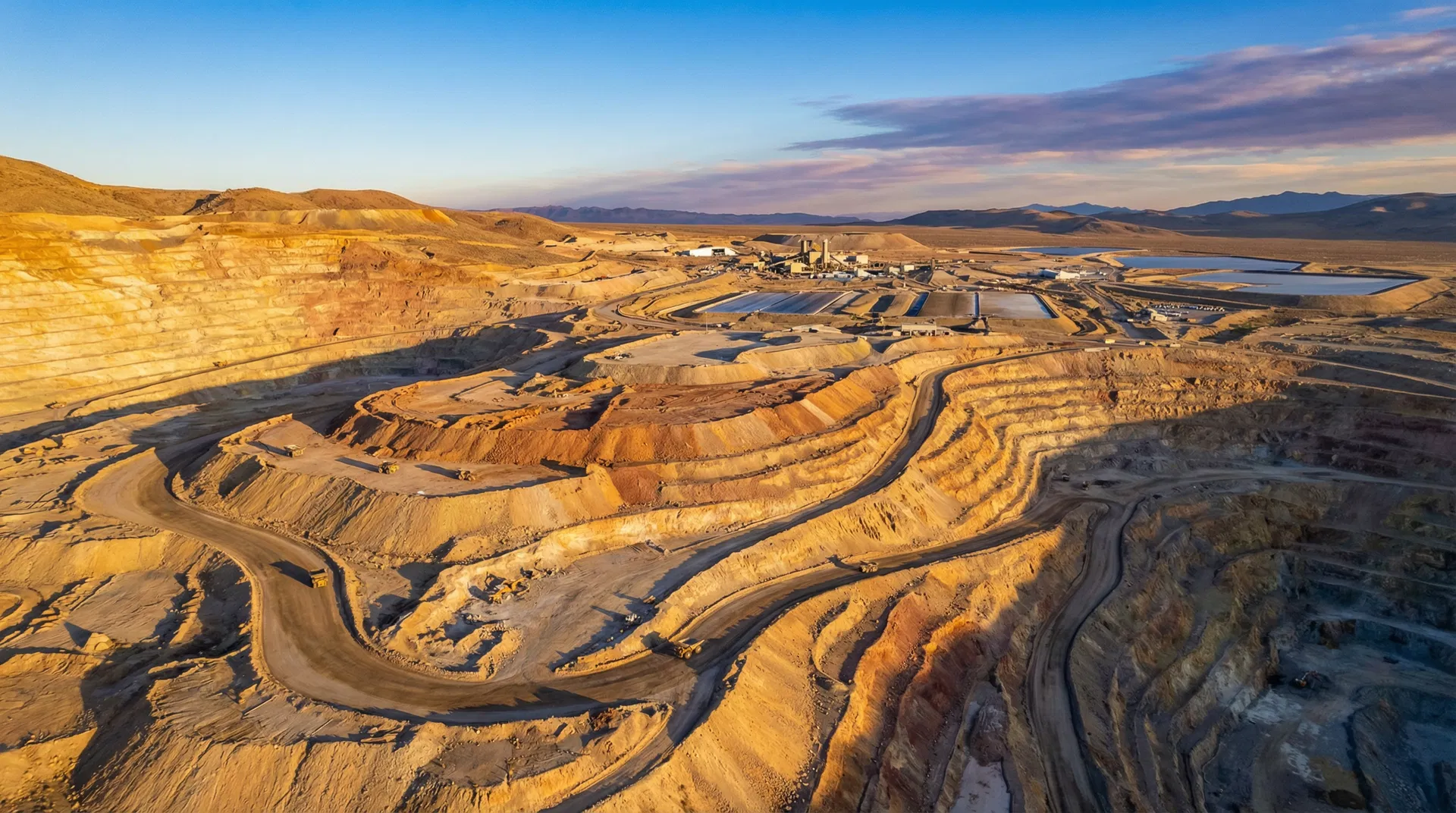

Gold is a Finite Resource in an Expanding Economy
For centuries, gold has been the ultimate symbol of wealth and permanence. Yet while economies expand infinitely through digital assets and printed currencies, gold remains stubbornly finite. Every ounce extracted today is one less available tomorrow—and the cost of finding, permitting, and refining the next ounce keeps climbing.
In an era of inflationary policies and uncertain markets, the rarity of physical gold is more than symbolic—it’s structural. The harder it becomes to mine, the more valuable existing gold holdings become.
The Decline of High-Grade Ore
Gold mining isn’t what it used to be. In the 1960s, the average ore grade—the amount of gold per ton of rock—was around 10 grams per ton. Today, most new deposits yield less than 1 gram per ton. That means modern miners must move and process 10x more earth to extract the same amount of gold.
This steep decline in ore quality creates a twofold pressure:
-
Rising operational costs: Energy, labor, and equipment expenses soar with each ton of rock processed.
-
Lower environmental efficiency: More water, chemicals, and land disturbance are required for every ounce produced.
In short, even with technological advances, the world’s “easy gold” has already been mined.
The Economics of Scarcity
While demand for gold continues to grow—driven by central banks, institutional funds, and retail investors—supply growth has slowed to a crawl. Global mine production has been flat or declining since 2019, according to the World Gold Council.
That imbalance between limited supply and rising demand creates the conditions for long-term appreciation in gold prices.
Unlike fiat currency, which can be printed at will, gold must be earned from the earth—and every year, it costs more to do so.
Rising Energy and Labor Costs
Mining is an energy-intensive business. Diesel fuel powers excavation equipment, electricity runs processing plants, and transportation costs rise with global fuel prices.
Add in the labor shortages across mining sectors and the increasing cost of regulatory compliance, and the economics become clear:
Extracting each ounce of gold now requires more capital, more time, and more risk than ever before.
For example:
-
New mines can take 10–15 years from exploration to production.
-
Development costs often exceed $1 billion per site.
-
Political instability and permitting delays in gold-rich regions like South America and Africa further drive up risk premiums.
Environmental and Social Pressures
Mining projects today face more scrutiny than at any time in modern history. Communities and governments are demanding stronger environmental, social, and governance (ESG) standards—forcing companies to invest heavily in sustainable practices.
While this is a positive evolution for the planet, it adds another layer of cost and complexity. These factors reduce the number of viable projects and slow the pace of new discoveries, deepening the scarcity cycle.
The Age of “Peak Gold”
Many analysts believe the world may have already reached “peak gold”—the point at which annual production hits its maximum and begins to decline.
As major gold fields in Australia, South Africa, and North America mature, and new discoveries become rarer, the reality is setting in:
Each ounce mined from now on will likely be more expensive than the last.
For investors, this means physical gold—especially in the form of coins, bars, and bullion-backed IRAs—represents not just a store of value, but a claim on a vanishing resource.
Why This Matters for Investors
The rising cost of mining translates directly into higher replacement costs for every ounce in circulation.
That supports stronger price floors, limits downside volatility, and reinforces gold’s role as a long-term inflation hedge.
Physical gold ownership—through American Standard Gold—provides a tangible connection to this scarcity story. Unlike paper or digital assets, each bar or coin represents something the modern economy can’t replicate: finite, irreplaceable wealth.
The Takeaway: Scarcity Builds Strength
As the hidden costs of mining mount, the world’s supply of new gold will only become more constrained. For investors, that scarcity underpins gold’s enduring value—and reinforces why physical ownership remains essential to any diversified portfolio.
Owning gold today isn’t just about preserving wealth—it’s about owning what the world can no longer easily produce.
Call to Action (optional for web version):
📞 Speak with an American Standard Gold Advisor to explore IRA-eligible options or diversified physical portfolios designed for lasting protection.
Schedule a Consultation →