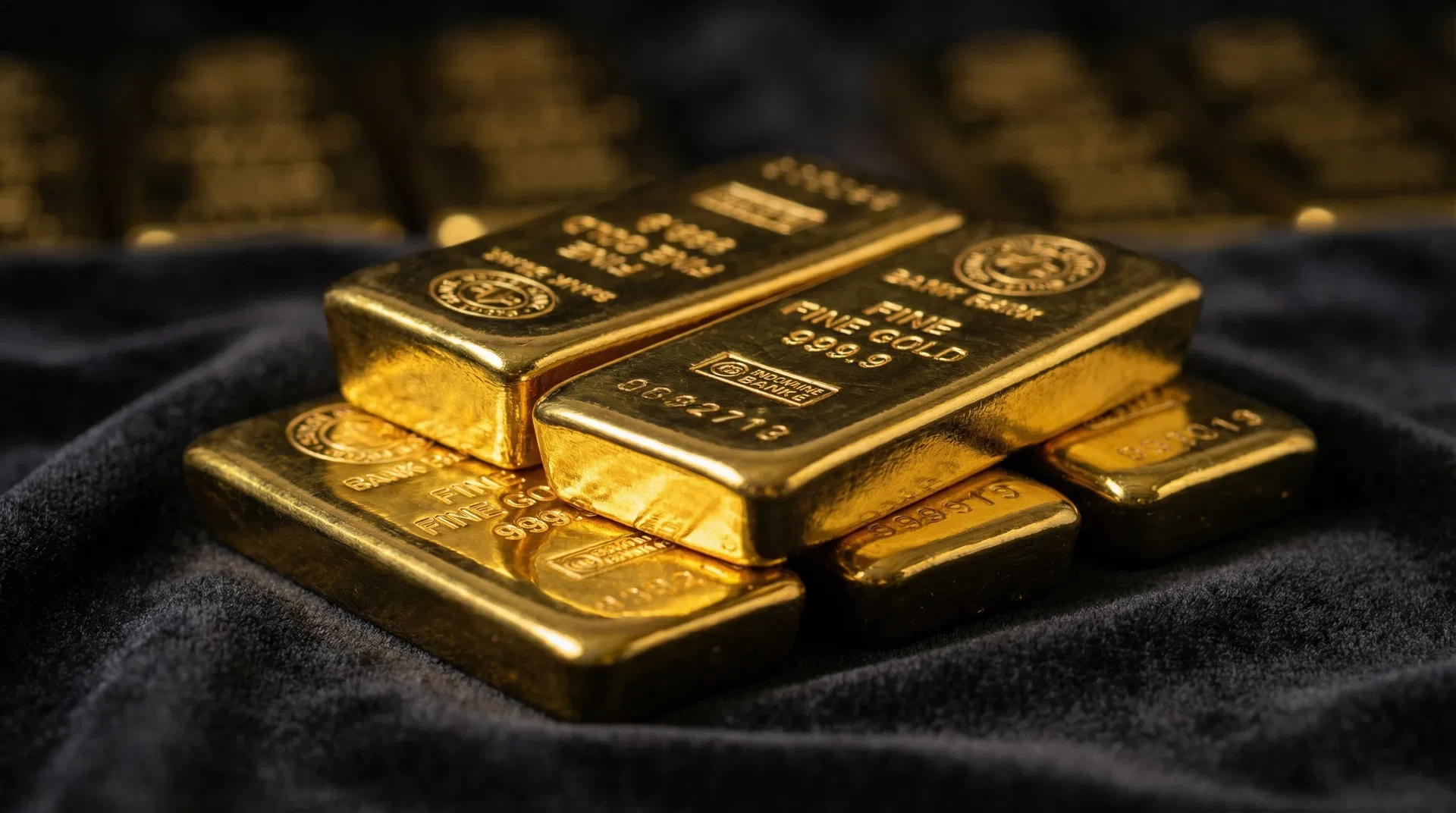
In that shift, one truth has resurfaced with tremendous force:When everything goes digital, tangible assets become more valuable.
Gold, silver, and other precious metals have outlasted empires, currencies, political systems—even entire technological eras. They remain the most reliable form of wealth protection because they are real, physical, and impossible to replicate.
This article explores whytangible precious metals are not just an option—but a necessity—in an uncertain, increasingly digital financial landscape.
1. Tangible Assets Provide Security That Digital Items Cannot Replicate
Every digital asset—stocks, bonds, cryptocurrencies, even cash in your bank account—exists only as a digital record. Those records depend on:
- Software
- Servers
- Networks
- Financial institutions
- Regulatory oversight
Any disruption to those systems—whether cyberattack, fraud, blackout, political crisis, or system failure—instantly puts digital wealth at risk.
Precious metals cannot be hacked, deleted, corrupted, frozen, inflated, or digitally erased.
There is no password, no blockchain dependency, no server vulnerability.
They existindependently of the financial system, which makes them invaluable during periods of instability.
2. Precious Metals Hold Intrinsic Value—Technology Doesn’t Change Their Worth
The problem with digital currencies and even many traditional paper assets is simple:
Their value depends on confidence—not substance.
Bitcoin is worth what peoplebelieveit is worth.The U.S. dollar is worth what institutionssayit is worth.Stocks are worth what the marketfeelsat any given moment.
Gold and silver, however, carryintrinsic valuebecause of their:
- Global recognition
- Finite supply
- Industrial utility
- Historical role as money
- Universal demand
A gold ounce is worth a gold ounce—no matter the country, political regime, or currency system.
You cannot say that about digital assets that can disappear with a server outage or regulatory change.
3. Digital Currencies Are Highly Volatile and Speculative
The crypto market has no shortage of overnight millionaires—and overnight bankruptcies.
Prices can swing20–40% in a matter of hours.Coins can collapse to zero.Exchanges can be hacked, shut down, or jailed.
Even established cryptocurrencies are subject to:
- Government regulation
- Exchange failures
- Liquidity crises
- Market manipulation
- Extreme volatility
Precious metals, on the other hand, move withlong-term, historically documented cycles, driven by:
- Inflation
- Central bank policy
- Global conflict
- Currency devaluation
- Supply constraints
Gold and silver are not gambling chips. They are thebedrock of wealth preservation.
4. Gold and Silver Protect Against Inflation and Currency Decline
Inflation is not a temporary issue—it’s structural. Every decade, paper money loses purchasing power. Since the 1970s, the U.S. dollar has lostover 85% of its value.
Gold during that same period?
It hasincreased more than 40x.
Digital currencies claim to be inflation-resistant, but history shows that:
- Crypto prices collapse far faster than inflation rises
- Many digital coins have unlimited minting
- Market manipulations cause sudden losses
Onlytangible assetsprotect purchasing power across decades—not months.
Precious metals don’t rely on government monetary policy or the health of the banking system. They simplyremain valuable.
5. Tangible Metals Provide True Ownership—Not IOUs
When you own physical gold or silver, you own it outright. No institution can:
- Freeze
- Deny access
- Reverse transactions
- Limit withdrawals
Digital currencies require digital access.Brokerage accounts require political and banking stability.Crypto exchanges require solvency and security.
Physical metals providesovereign ownership—the purest form of financial independence.
6. Precious Metals Have 5,000+ Years of Proven Performance
There’s a reason central banks still buy gold—not Bitcoin.
Over 100 central banks and governments hold gold as a reserve asset, because it is:
- Portable
- Durable
- Universally trusted
- Inflation-resistant
- Crisis-proof
No digital asset has a 5,000-year history.
- Wars
- Depressions
- Crashes
- Regime changes
- Monetary resets
- Industrial revolutions
- Technological transformations
Digital assets have been around for roughly15 years. Their track record is not yet convincing.
7. In Every Major Crisis, Digital Assets Collapse First
When uncertainty rises, investors flood intotangible safe havens, not digital experiments.
- The 2008 financial crisis
- The 2020 pandemic crash
- The 2022 crypto winter
- Banking failures
- Geopolitical tensions
- Bond-market volatility
Precious metals rise.Digital assets fall.
Gold’s greatest strength is not rapid growth—it’sstability when everything else breaks.
8. Tangible Metals Add Critical Diversification to a Modern Portfolio
Digital-heavy portfolios are highly correlated. When one sector falls, others often follow.
Precious metals, however, have:
- Low correlation to stocks
- Low correlation to crypto
- Negative correlation to the dollar
- Positive correlation to inflation
That makes them the most powerfulrisk-balancing toolavailable to modern investors.
Even many crypto investors now allocate20-30%of their wealth to gold and silver for diversification.
Digital financial systems track and record every transaction. Governments have full oversight of:
- Bank transfers
- Brokerage accounts
- Crypto exchanges
- Payment apps
- Online wallets
Physical metals offer something extremely rare in the modern world:
You can hold them privately, store them securely, and sell them whenyoudecide—not when the market dictates.
Conclusion: Digital Finance Will Grow, But Tangible Wealth Will Always Matter
There is nothing wrong with digital assets—they are innovative, accessible, and potentially lucrative. But they cannot replace what precious metals provide:
- Stability
- Tangibility
- Intrinsic value
- Independence
- Crisis protection
- Inflation hedging
- Long-term wealth preservation
In a world where everything is becoming digital, the smartest investors are doubling down on what cannot be manipulated or erased:
Physical gold and silver.