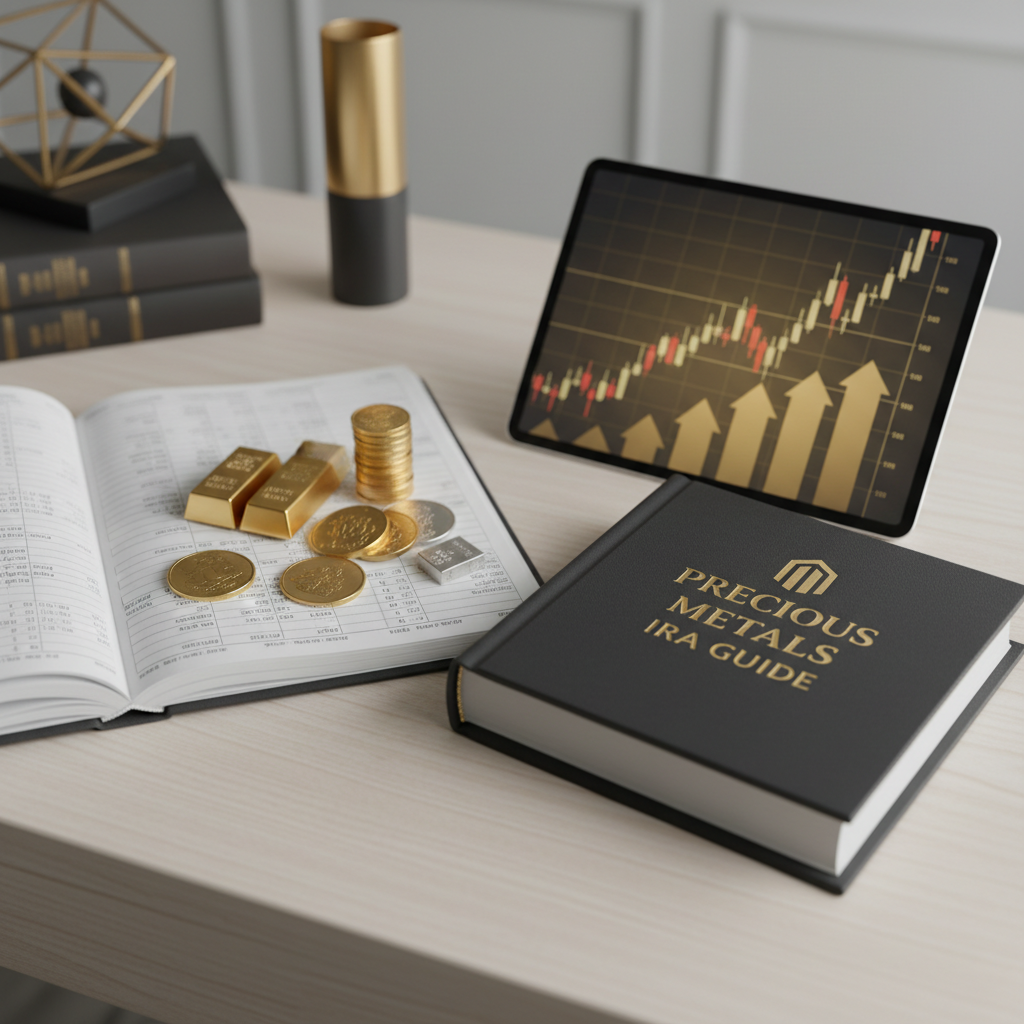
For discerning investors seeking to diversify their retirement portfolios and safeguard their wealth against economic volatility, a precious metals IRA represents a sophisticated strategy. Unlike traditional IRAs that hold paper assets like stocks, bonds, and mutual funds, a precious metals IRA allows individuals to invest directly in physical gold, silver, platinum, and palladium. This approach offers a tangible asset class that has historically served as a safe haven during periods of market uncertainty and inflation.
A precious metals IRA operates under the same tax advantages as a traditional or Roth IRA, meaning contributions may be tax-deductible, and earnings can grow tax-deferred or tax-free, depending on the account type. The primary distinction lies in the underlying assets: instead of securities, your IRA holds investment-grade physical precious metals stored securely in an approved depository. Understanding how this specialized retirement vehicle functions is crucial for those considering its benefits for long-term wealth preservation.
Table of Contents
- What is a Precious Metals IRA?
- How Does a Precious Metals IRA Work? The Mechanics
- What Are the Tax Advantages of a Precious Metals IRA?
- Which Precious Metals Are Eligible for an IRA?
- Choosing a Custodian and Depository for Your Precious Metals IRA
- The Process of Funding Your Precious Metals IRA
- Why Consider a Precious Metals IRA for Retirement Security?
- FAQs About Precious Metals IRAs
What is a Precious Metals IRA?
A precious metals IRA, often referred to as a Gold IRA, is a self-directed Individual Retirement Account that permits the holding of physical gold, silver, platinum, and palladium bullion. Established by the Taxpayer Relief Act of 1997, this type of IRA provides a unique opportunity to diversify retirement savings beyond conventional paper assets. The Internal Revenue Service (IRS) mandates specific rules regarding the purity and storage of these metals to qualify for IRA inclusion.
The core concept is to provide investors with a tangible asset that can act as a hedge against inflation and currency devaluation, historically offering a degree of portfolio protection. Unlike owning physical metals directly, holding them within an IRA structure allows for the significant benefit of tax-deferred growth or tax-free withdrawals in retirement, mirroring the advantages of traditional and Roth IRAs.
How Does a Precious Metals IRA Work? The Mechanics
Understanding how a precious metals IRA works involves several key components and a structured process. It begins with selecting an IRS-approved custodian, which is a financial institution responsible for managing your account and ensuring compliance with all regulatory requirements. Unlike traditional IRAs where a bank or brokerage might serve as both custodian and asset holder, a precious metals IRA requires a separate, IRS-approved depository for the physical storage of your metals.
The process generally involves:
- Selecting an Expert Advisor: Partner with a reputable firm like American Standard Gold, which specializes in investment-grade precious metals and can guide you through the entire setup.
- Choosing a Custodian: Your custodian will handle all administrative duties, including reporting to the IRS and facilitating the purchase and sale of metals.
- Establishing a Depository Account: The physical precious metals must be stored in an IRS-approved, third-party depository. These facilities offer high-level security and insurance for your assets.
- Funding Your IRA: You can fund your precious metals IRA through direct contributions, rollovers from existing 401(k)s or other IRAs, or transfers from similar accounts.
- Purchasing Eligible Metals: Once funded, your custodian, often in coordination with your expert advisor, will facilitate the purchase of IRS-approved gold, silver, platinum, or palladium from authorized mints and LBMA-approved refiners.
This structured approach ensures compliance and provides peace of mind regarding the security of your investment-grade assets.
What Are the Tax Advantages of a Precious Metals IRA?
One of the most compelling reasons to consider a precious metals IRA is the array of tax advantages it offers, aligning with those of conventional IRAs. These benefits can significantly enhance your long-term retirement savings strategy.
- Tax-Deferred Growth: For traditional precious metals IRAs, any earnings or appreciation on your precious metals investments are not taxed until you begin taking distributions in retirement. This allows your wealth to compound more efficiently over decades.
- Tax-Free Withdrawals: If you establish a Roth precious metals IRA, your contributions are made with after-tax dollars, but qualified withdrawals in retirement are entirely tax-free. This can be particularly advantageous for individuals who anticipate being in a higher tax bracket during retirement.
- Potential for Deductible Contributions: Contributions to a traditional precious metals IRA may be tax-deductible in the year they are made, reducing your current taxable income. The specific deductibility depends on your income level and whether you or your spouse are covered by a retirement plan at work.
These tax benefits make a precious metals IRA a powerful tool for wealth preservation and growth, especially when combined with the intrinsic value of physical precious metals. According to the World Gold Council, gold has historically outperformed many asset classes during periods of high inflation, further enhancing its appeal within a tax-advantaged account.
Which Precious Metals Are Eligible for an IRA?
The IRS has strict guidelines regarding which types of physical precious metals can be held within a precious metals IRA. Not all gold, silver, platinum, or palladium products qualify. The primary criteria revolve around purity and form.
IRS Purity Standards:
- Gold: Must be 99.5% pure (0.995 fine).
- Silver: Must be 99.9% pure (0.999 fine).
- Platinum: Must be 99.95% pure (0.9995 fine).
- Palladium: Must be 99.95% pure (0.9995 fine).
Eligible forms typically include bullion coins and bars produced by authorized mints and LBMA-approved refiners. Examples of eligible products include American Gold Eagles, Canadian Gold Maple Leafs, American Silver Eagles, and various bars meeting the purity standards. Collectible coins, such as rare or numismatic coins, are generally not permitted because the IRS views their value as primarily derived from their rarity rather than their metal content.
American Standard Gold exclusively deals in investment-grade precious metals that meet or exceed these stringent IRS requirements, ensuring your IRA investments are fully compliant.
Choosing a Custodian and Depository for Your Precious Metals IRA
The selection of an IRS-approved custodian and a secure depository is paramount when establishing a precious metals IRA. These entities play critical roles in the proper functioning and compliance of your account.
The Role of the Custodian:
The custodian is a financial institution, often a trust company, responsible for administering your IRA. Their duties include:
- Handling all paperwork and IRS reporting.
- Facilitating the purchase and sale of your precious metals.
- Ensuring all transactions comply with IRS regulations.
- Providing statements and record-keeping for your account.
It is crucial to choose a custodian with extensive experience in self-directed IRAs and a strong track record of compliance. Your expert advisor at American Standard Gold can recommend reputable custodians.
The Role of the Depository:
The depository is where your physical precious metals are securely stored. The IRS mandates that IRA-held metals cannot be stored at home or in a personal safe deposit box. Approved depositories are highly secure, insured facilities that specialize in the storage of valuable assets. They provide:
- Advanced security measures (e.g., vaults, surveillance, armed guards).
- Comprehensive insurance coverage for your metals.
- Segregated storage options, ensuring your specific assets are identifiable and separate from others.
Many reputable depositories are located across the United States, offering peace of mind regarding the physical security of your investment. This dual-entity structure ensures proper oversight and protection for your retirement assets.
The Process of Funding Your Precious Metals IRA
Funding your precious metals IRA can be accomplished through several methods, providing flexibility for various financial situations. The most common ways include direct contributions, rollovers, and transfers.
- Direct Contributions: If you are eligible, you can contribute directly to your precious metals IRA each year, up to the IRS-mandated limits. For 2024, the contribution limit for IRAs is $7,000, or $8,000 if you are age 50 or older.
- 401(k) Rollover: This is a popular option for individuals leaving an employer or those whose current 401(k) plan allows in-service distributions. You can roll over funds from an existing 401(k), 403(b), 457(b), or TSP account into your new precious metals IRA without incurring taxes or penalties. This process typically involves a direct transfer from your old plan administrator to your new IRA custodian.
- IRA Transfer: If you already have a traditional, Roth, SEP, or SIMPLE IRA, you can transfer funds from these accounts to your precious metals IRA. This is also a tax-free event, allowing you to reallocate existing retirement savings into physical precious metals.
American Standard Gold's expert advisors can help you navigate these funding options, ensuring a smooth and compliant transition of your assets into physical gold and silver IRAs. We guide clients through the necessary paperwork and coordination with custodians to facilitate these transactions efficiently.
Why Consider a Precious Metals IRA for Retirement Security?
For high-net-worth individuals, retirees, and families focused on long-term wealth preservation, a precious metals IRA offers distinct advantages that contribute to robust retirement security.
- Diversification: Physical precious metals have a low correlation with traditional paper assets like stocks and bonds. Including them in your IRA can reduce overall portfolio volatility and enhance stability, particularly during market downturns.
- Inflation Hedge: Gold and silver have historically maintained their purchasing power during periods of inflation, acting as a reliable store of value when fiat currencies decline.
- Protection Against Economic Uncertainty: In times of geopolitical instability or economic crisis, precious metals are often seen as a safe haven asset. Their tangible nature provides a sense of security that digital or paper assets cannot always offer.
- Tangible Asset Ownership: Owning physical gold, silver, platinum, or palladium within your IRA provides a tangible asset that is not subject to counterparty risk inherent in many financial instruments.
- Long-Term Growth Potential: While past performance is not indicative of future results, precious metals have demonstrated significant long-term growth, with gold averaging an annual return of approximately 7.7% over the last 50 years, according to data from the World Gold Council.
By incorporating a precious metals IRA into your retirement strategy, you are not merely investing; you are fortifying your financial future with assets that have stood the test of time. American Standard Gold is committed to educating clients on these benefits, providing expert advice without sales pressure. We believe in empowering our clients to make informed decisions for their retirement protection.
FAQs About Precious Metals IRAs
Can I hold physical gold at home in my precious metals IRA?
No, you cannot hold physical gold at home in your precious metals IRA. The IRS mandates that all IRA-held precious metals must be stored in an approved, third-party depository to ensure proper security and compliance.
What is the minimum investment for a precious metals IRA?
The minimum investment for a precious metals IRA can vary by custodian and the precious metals firm you work with. While there isn't a strict IRS minimum, most custodians and firms, including American Standard Gold, typically require an initial investment of $10,000 to $25,000 to make the setup and maintenance fees economically viable.
Are there any fees associated with a precious metals IRA?
Yes, there are typically fees associated with a precious metals IRA. These include annual custodian fees for account administration, storage fees charged by the depository, and transaction fees for purchasing or selling metals. American Standard Gold provides transparent information regarding all associated costs during your complimentary consultation.
Can I convert an existing IRA or 401(k) into a precious metals IRA?
Yes, you can convert an existing IRA or roll over funds from a 401(k), 403(b), 457(b), or TSP into a precious metals IRA. This process is generally tax-free and allows you to reallocate your retirement savings into physical precious metals without incurring penalties.
What types of precious metals can I invest in through my IRA?
You can invest in IRS-approved gold, silver, platinum, and palladium bullion within your precious metals IRA. These metals must meet specific purity standards (e.g., 99.5% for gold, 99.9% for silver) and be produced by authorized mints or LBMA-approved refiners.
For a deeper understanding of how a precious metals IRA can enhance your retirement strategy, we invite you to schedule a complimentary consultation with an expert advisor at American Standard Gold. Call us at (832) 210-1560 or email info@americanstandardgold.com. Explore our Gold & Silver IRA information page for more details.