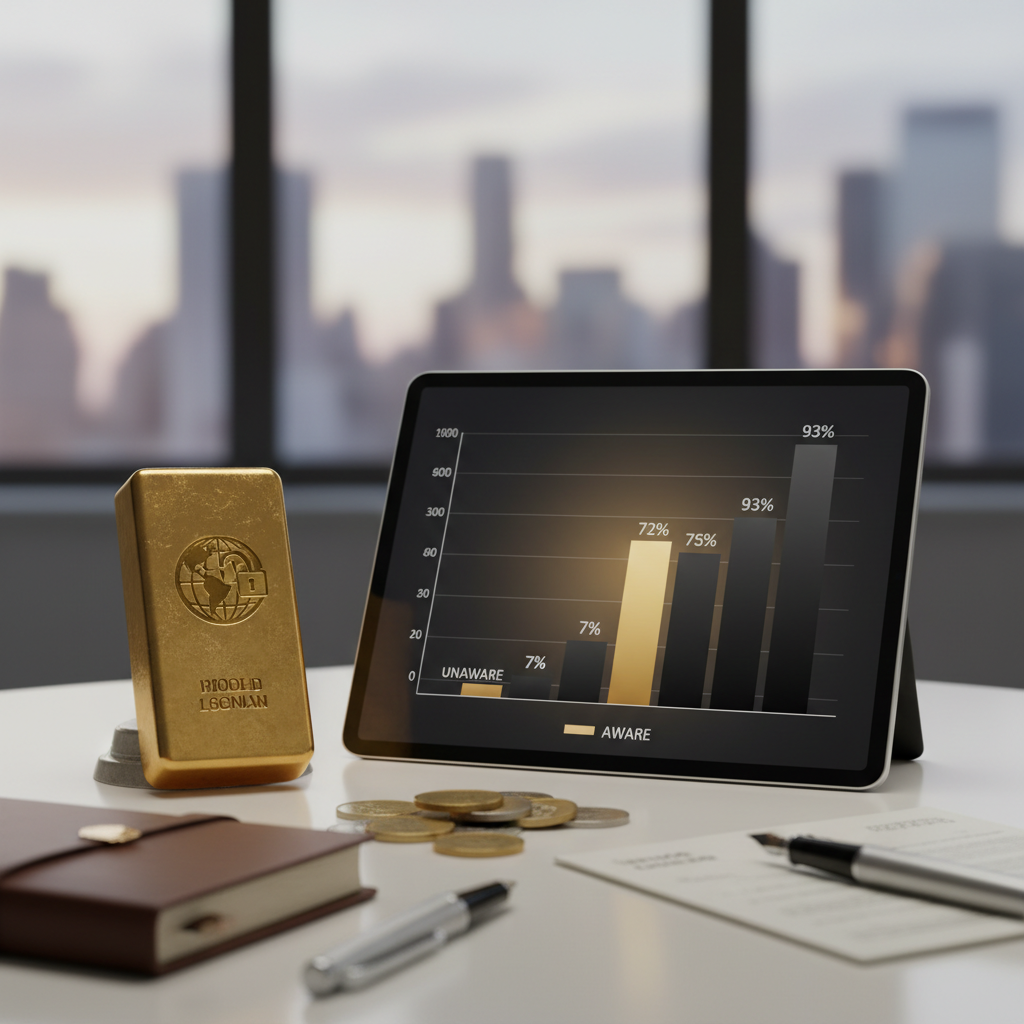
In an evolving financial landscape, preserving wealth and ensuring a secure retirement remains a paramount concern for many American investors. While traditional retirement vehicles like 401(k)s and IRAs are widely recognized, a lesser-known yet increasingly vital option is the Precious Metals IRA. This specialized retirement account allows individuals to hold physical gold, silver, platinum, and palladium within a tax-advantaged structure. The question arises: What percentage of Americans are even aware of a Precious Metals IRA?
Understanding the current awareness levels is crucial for investors seeking to diversify their portfolios and protect against economic uncertainties. American Standard Gold, as your expert advisor in investment-grade precious metals, aims to shed light on this important aspect of retirement planning.
TL;DR: While exact, up-to-date figures are scarce, industry estimates suggest that a relatively small percentage of American investors, likely in the single digits, are fully aware of the mechanics and benefits of a Precious Metals IRA. This indicates a significant opportunity for education on how these accounts can fortify retirement savings with tangible assets.
Table of Contents
- The Awareness Gap: Why Many Americans Don't Know About Precious Metals IRAs
- What Exactly is a Precious Metals IRA?
- Key Benefits of Including Precious Metals in Your Retirement Account
- How to Invest in a Precious Metals IRA
- Choosing the Right Custodian and Dealer for Your Precious Metals IRA
- Conclusion: Bridging the Knowledge Gap for Retirement Security
- Frequently Asked Questions About Precious Metals IRAs
The Awareness Gap: Why Many Americans Don't Know About Precious Metals IRAs
Despite the growing interest in tangible assets, comprehensive data on the exact percentage of Americans aware of a Precious Metals IRA is not readily available from major financial institutions or government surveys. However, anecdotal evidence and industry expert observations suggest that awareness remains relatively low compared to traditional investment vehicles.
Several factors contribute to this awareness gap:
- Dominance of Traditional Assets: Most employer-sponsored retirement plans (like 401(k)s) and brokerage IRAs primarily offer mutual funds, stocks, and bonds. Precious metals are often not presented as a direct option.
- Specialized Knowledge Required: Investing in physical precious metals within an IRA requires a specific understanding of IRS regulations, approved custodians, and authorized depositories. This complexity can deter some investors and financial advisors unfamiliar with the process.
- Limited Mainstream Marketing: Unlike large mutual fund companies or robo-advisors, firms specializing in Precious Metals IRAs often have a more targeted marketing approach, reaching specific segments of the investment community.
- Media Focus: Financial news often concentrates on the stock market, real estate, and broader economic indicators, with less frequent in-depth coverage of alternative assets like physical gold and silver for retirement.
For instance, a 2023 survey by the World Gold Council indicated that while 20% of global investors consider gold a good investment, the specific mechanism of holding it within a tax-advantaged IRA is less commonly understood by the general public in the United States. This highlights a critical educational need that firms like American Standard Gold are dedicated to addressing.
What Exactly is a Precious Metals IRA?
A Precious Metals IRA, often referred to as a Gold IRA or Silver IRA, is a self-directed Individual Retirement Account that permits the holding of physical investment-grade precious metals. Unlike a standard IRA which typically holds paper assets, a Precious Metals IRA allows investors to diversify their retirement portfolio with tangible assets that have historically served as a hedge against inflation and economic instability.
The Internal Revenue Service (IRS) has specific rules governing what types of precious metals can be held in these accounts. Generally, they must meet certain fineness standards and be produced by authorized mints and LBMA-approved refiners. Common examples include American Gold Eagles, Canadian Gold Maple Leafs, and specific silver bullion bars.
Key Benefits of Including Precious Metals in Your Retirement Account
For high-net-worth individuals, retirees, and families seeking wealth preservation, the benefits of a Precious Metals IRA are compelling:
- Diversification: Precious metals often exhibit a low correlation with traditional assets like stocks and bonds, meaning they can perform differently during market fluctuations. This can help reduce overall portfolio risk.
- Inflation Hedge: Gold and silver have historically maintained their purchasing power during periods of inflation, offering protection against the erosion of currency value.
- Wealth Preservation: For centuries, precious metals have been recognized as a store of value, making them an excellent choice for long-term wealth preservation, especially for retirement accounts.
- Tangible Asset Ownership: Unlike paper assets, physical precious metals represent a tangible store of value that you can hold (through a secure depository).
- Tax Advantages: Like traditional IRAs, a Precious Metals IRA offers tax-deferred growth (Traditional IRA) or tax-free withdrawals in retirement (Roth IRA), depending on the account type.
According to data from the Federal Reserve, the average American household's retirement savings are heavily concentrated in equities. Introducing investment-grade precious metals can provide a crucial counterbalance, especially in uncertain economic times.
How to Invest in a Precious Metals IRA
Establishing a Precious Metals IRA involves a few distinct steps, which an expert advisor at American Standard Gold can guide you through:
- Choose a Self-Directed IRA Custodian: Not all IRA custodians handle physical precious metals. You need a specialized custodian approved by the IRS.
- Fund Your IRA: You can fund your Precious Metals IRA through a direct contribution, a rollover from an existing 401(k) or 403(b), or a transfer from an existing IRA. A direct transfer is often the most straightforward method for existing IRAs.
- Select Your Precious Metals: Work with a reputable dealer, like American Standard Gold, to select IRS-approved investment-grade gold, silver, platinum, or palladium products.
- Choose a Depository: Your physical precious metals must be stored in an IRS-approved, secure depository, not at home. The custodian will facilitate this.
Our advisory process ensures a seamless and compliant experience for our clients, from initial consultation to the secure storage of their assets.
What are the IRS rules for a Precious Metals IRA?
The IRS mandates specific fineness requirements for precious metals held in an IRA. For gold, it must be 99.5% pure; for silver, 99.9% pure; for platinum and palladium, 99.95% pure. Furthermore, the metals must be in the form of coins or bars produced by authorized mints and LBMA-approved refiners. Examples include American Eagle coins, Canadian Maple Leaf coins, and specific PAMP Suisse bars. Collectible coins or jewelry are not permitted.
Choosing the Right Custodian and Dealer for Your Precious Metals IRA
The success and security of your Precious Metals IRA largely depend on the partners you choose. It is paramount to select a reputable self-directed IRA custodian and an expert advisor for your precious metal purchases.
- Custodians: Look for custodians with a long track record, transparent fee structures, and robust customer service. They are responsible for holding your assets and ensuring IRS compliance.
- Dealers: Partner with a trustworthy dealer like American Standard Gold. We specialize in investment-grade precious metals, sourcing only from authorized mints and LBMA-approved refiners. Our commitment to transparency and client education ensures you receive fair pricing and genuine products. Our product catalog features a wide range of IRS-approved options.
When considering a Precious Metals IRA, it is essential to understand the distinction between a dealer and a custodian. The dealer sells you the physical metals, while the custodian holds them on behalf of your IRA. American Standard Gold works with several trusted custodians to streamline this process for our clients.
Conclusion: Bridging the Knowledge Gap for Retirement Security
While the exact percentage of Americans aware of a Precious Metals IRA may be lower than desired, the increasing economic volatility and desire for tangible asset protection are driving greater interest. As an investment-grade option, a Precious Metals IRA offers significant benefits for diversifying retirement accounts and preserving wealth.
American Standard Gold is dedicated to bridging this knowledge gap, providing authoritative and trustworthy guidance to help you understand if a Precious Metals IRA aligns with your financial objectives. Our expert advisors are here to offer personalized insights without sales pressure, focusing solely on your long-term financial well-being.
To learn more about how precious metals can enhance your retirement strategy, we invite you to explore our resources on why invest in precious metals or Gold & Silver IRA information. For a deeper discussion tailored to your specific situation, please schedule a complimentary consultation with one of our expert advisors today. You can reach us directly at (832) 210-1560 or via email at info@americanstandardgold.com.
Frequently Asked Questions About Precious Metals IRAs
What is a Precious Metals IRA?
A Precious Metals IRA is a self-directed Individual Retirement Account that allows investors to hold physical investment-grade gold, silver, platinum, and palladium within a tax-advantaged retirement structure.
What types of precious metals can be held in an IRA?
The IRS permits specific types of investment-grade precious metals, including gold (99.5% pure), silver (99.9% pure), platinum (99.95% pure), and palladium (99.95% pure) in coin or bar form from authorized mints and LBMA-approved refiners.
How do I open a Precious Metals IRA?
Opening a Precious Metals IRA typically involves selecting a self-directed IRA custodian, funding the account (via transfer, rollover, or contribution), purchasing IRS-approved metals from a dealer like American Standard Gold, and arranging for secure storage at an approved depository.
Are Precious Metals IRAs safe?
Yes, Precious Metals IRAs are considered safe when established with reputable custodians and dealers, and when physical metals are stored in IRS-approved, insured depositories. The assets are held in your name, and the process is regulated by the IRS.
What are the advantages of a Precious Metals IRA over a traditional IRA?
The primary advantage is diversification with tangible assets. A Precious Metals IRA allows you to hold physical gold, silver, platinum, or palladium, which can act as a hedge against inflation and economic instability, unlike traditional IRAs typically holding paper assets.