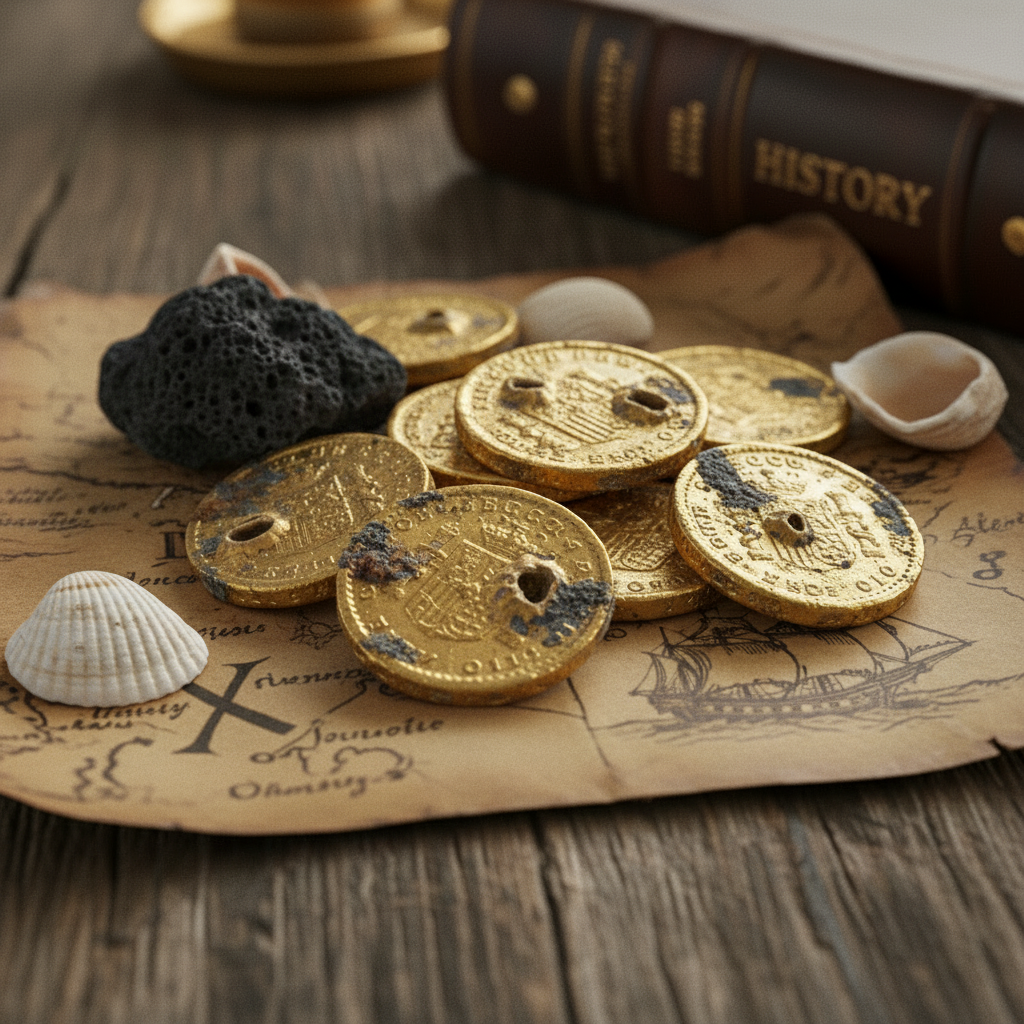
The Allure of the Spanish Escudo: A Legacy of Global Wealth
For the sophisticated investor, the appeal of physical gold lies not only in its intrinsic value but also in its history as a store of wealth that transcends centuries. Among the most coveted artifacts in the world of investment-grade precious metals is the Spanish Escudo. These coins, particularly those recovered from historic shipwrecks like the ill-fated 1715 Treasure Fleet, represent a unique intersection of numismatic rarity and tangible asset security. Understanding the story of the shipwrecked Escudo is essential for any family or individual seeking to diversify their holdings with assets that possess a finite supply and a documented provenance.
The Escudo was the backbone of the Spanish Empire’s monetary system, a currency that facilitated global trade when Spain was the world’s preeminent superpower. Struck in 22-karat gold, these coins were minted across the New World in locations such as Mexico City, Lima, and Potosi. While millions were produced, a significant portion of this wealth was lost to the depths of the Atlantic during the perilous journey back to Europe. Today, the recovery of these 'sunken treasures' provides a rare opportunity for modern investors to own a piece of history that has literally stood the test of time and tide.
The 1715 Treasure Fleet: A Catastrophe That Preserved History
The most significant source of shipwrecked Escudos is the 1715 Treasure Fleet. On July 31, 1715, eleven of the twelve ships in a Spanish convoy were decimated by a massive hurricane off the coast of Florida. The fleet was carrying a king’s ransom in gold, silver, and jewels—wealth intended to stabilize the Spanish crown after the costly War of the Spanish Succession. The ships were driven into the jagged reefs, scattering their cargo across the ocean floor. For over two centuries, this wealth remained hidden beneath the sand, earning the region the moniker 'The Treasure Coast.'
The loss was a staggering blow to the Spanish economy, but for the modern collector and investor, the disaster acted as a time capsule. Because the gold was submerged in a low-oxygen environment, often protected by layers of sand and sediment, many of the Escudos recovered today remain in remarkable condition. Unlike silver, which corrodes in saltwater, gold is chemically inert. This means that an Escudo recovered 300 years later often retains the same luster and detail it possessed the day it was struck at the mint.
Minting the Escudo: From Cobs to Royal Strikes
To appreciate the value of a shipwrecked Escudo, one must understand how they were made. During the colonial era, Spanish mints utilized a process that resulted in 'cobs' (from the Spanish *cabo de barra*, meaning 'end of the bar'). Gold was melted, poured into long strips, and then hand-cut into planchets of the correct weight. These irregular chunks of gold were then hand-struck between two dies. Because of this manual process, no two Escudo cobs are exactly alike. Each coin is a unique work of art, featuring the cross of Christendom on one side and the Spanish royal coat of arms on the other.
Within the category of Escudos, there are also 'Royal' strikes, known as *Galanos*. These were specially produced coins struck on round, uniform planchets with high-quality dies, likely intended as gifts for royalty or high-ranking officials. While standard cobs are rare, Royals are exceptionally scarce and command significant premiums in the investment-grade market. An expert advisor at American Standard Gold can help distinguish between these variations, ensuring that your allocation reflects the appropriate level of rarity and historical significance.
The Technical Specifications of Investment-Grade Escudos
The Escudo was minted in several denominations: the 1, 2, 4, and 8 Escudo coins. The 2 Escudo coin is famously known as the 'doubloon,' a term that has become synonymous with pirate lore but holds serious weight in the financial world. The 8 Escudo coin, often called a 'Piece of Eight' in gold, was the largest denomination and contains approximately 27 grams of .917 fine gold (22 karats). This high gold content, combined with the coin's historical provenance, makes it a formidable asset for long-term wealth preservation.
When evaluating these coins, investors must look beyond just the weight of the metal. The value of a shipwrecked Escudo is derived from its 'three pillars': gold content, numismatic rarity, and provenance. Provenance refers to the documented history of the coin—specifically, which shipwreck it originated from and who recovered it. Coins from the 1715 Fleet carry a premium because of the well-documented nature of the disaster and the subsequent salvage efforts by legendary figures like Kip Wagner and Mel Fisher.
Authentication and the Role of Grading Services
In the world of physical precious metals, authenticity is paramount. For shipwreck gold, this is especially true given the prevalence of replicas and the complexities of maritime salvage laws. Investment-grade shipwreck Escudos should always be authenticated and graded by reputable third-party services such as the Numismatic Guaranty Company (NGC) or the Professional Coin Grading Service (PCGS). These organizations have specific designations for shipwreck coins, often labeling them with the 'Shipwreck Effect' (if the coin shows surface changes from the ocean) or providing a 'Genuine' certification that verifies its origin.
A certified coin is encapsulated in a tamper-evident holder, which not only protects the physical integrity of the gold but also provides a liquid market for the asset. At American Standard Gold, we emphasize the importance of working with authorized mints and LBMA-approved refiners for bullion, and for historical coins, we rely on these rigorous grading standards to ensure our clients receive only the highest quality assets. This level of scrutiny is what separates a casual hobbyist from a serious investor.
Why Shipwreck Gold Belongs in a Sophisticated Portfolio
Many investors ask why they should choose a shipwrecked Escudo over a modern gold bar or a standard bullion coin like the American Eagle. The answer lies in the concept of 'uncorrelated assets.' While the price of gold bullion is tied directly to the spot market, the value of a rare historical coin is influenced by its scarcity and collector demand. During periods of market volatility, historical gold often maintains its value or even appreciates independently of the spot price, providing a hedge against both inflation and systemic financial risk.
Furthermore, shipwreck gold offers a level of portability and privacy that is highly valued by families seeking to protect their generational wealth. A single 8 Escudo coin represents a significant concentration of value in a very small, durable form. Unlike paper assets or digital currencies, physical gold cannot be hacked, deleted, or devalued by central bank policies. It is a 'hard asset' in the truest sense, one that has already survived centuries of geopolitical upheaval and natural disasters.
The Salvage Movement: From the 1960s to Today
The modern era of shipwreck recovery began in earnest in the 1960s, when Kip Wagner formed the Real Eight Company to search for the remains of the 1715 Fleet. Using primitive equipment compared to today’s standards, Wagner and his team located several of the wreck sites, bringing thousands of gold coins back to the surface for the first time in 250 years. This sparked a 'gold rush' of maritime archaeology and salvage that continues to this day. Modern technology, including side-scan sonar and remotely operated vehicles (ROVs), has allowed salvors to reach deeper wrecks, but the 1715 Fleet remains the most prolific source of high-quality gold Escudos.
It is important for investors to understand the legal landscape of shipwreck salvage. Coins recovered from these sites are often subject to complex agreements between salvage companies and sovereign states (such as Florida or Spain). When you acquire a shipwrecked Escudo through a reputable firm like American Standard Gold, you are ensuring that the coin has a clear legal title and has been processed through the proper channels. This legal clarity is essential for the future resale or transfer of the asset.
Integrating Historical Gold into a Precious Metals IRA
While many investors choose to take physical possession of their shipwreck gold, it is also possible to incorporate certain investment-grade coins into a Precious Metals IRA. While the IRS has strict requirements for the fineness of bullion held in an IRA (.995+ for gold), there are specific provisions for certain types of historical and collectible coins. However, the primary role of shipwreck Escudos is typically found in a non-qualified (taxable) account where the investor can enjoy the benefits of direct ownership and the potential for long-term capital gains based on rarity.
For those looking to build a comprehensive precious metals strategy, a combination of IRA-eligible bullion for tax-advantaged growth and historical coins for private wealth preservation is often the most effective approach. Our team-based advisory process helps you determine the appropriate balance between these two categories, ensuring that your portfolio is optimized for both security and growth.
The Enduring Value of the 'Sunken Sun'
The Spanish referred to gold as the 'sun of the earth,' and the Escudos recovered from the sea are often called 'sunken suns.' This poetic description captures the enduring nature of the metal. Even after three centuries in the dark, crushing depths of the Atlantic, these coins emerge with a brilliance that is unmatched by any other material. For the investor, this brilliance is a metaphor for the stability and permanence that gold brings to a financial plan.
As we look toward an uncertain economic future, the lessons of the past become even more relevant. The Spanish Empire, for all its wealth and power, eventually declined, but the gold Escudos it produced remained valuable. They were valuable in 1715, they were valuable when they were recovered in the 1960s, and they are valuable today. By adding shipwrecked Escudo gold to your holdings, you are not just buying a coin; you are acquiring a proven survivor of history.
Conclusion: A Strategic Choice for Wealth Preservation
The story of the shipwrecked Escudo gold is a testament to the resilience of physical wealth. From the bustling mints of the New World to the violent storms of the Florida coast and finally to the vaults of modern investors, these coins have traveled a path that few other assets can claim. They offer a unique combination of high gold purity, extreme rarity, and a compelling historical narrative that appeals to both the logical investor and the passionate collector.
At American Standard Gold, we believe that wealth preservation requires a forward-looking strategy informed by historical context. The shipwrecked Escudo is the embodiment of this philosophy. As you consider the next steps for your portfolio, we invite you to explore the possibilities of historical gold. Our expert advisors are available to discuss how these remarkable coins can serve as a cornerstone of your family’s financial legacy, providing security and peace of mind for generations to come.