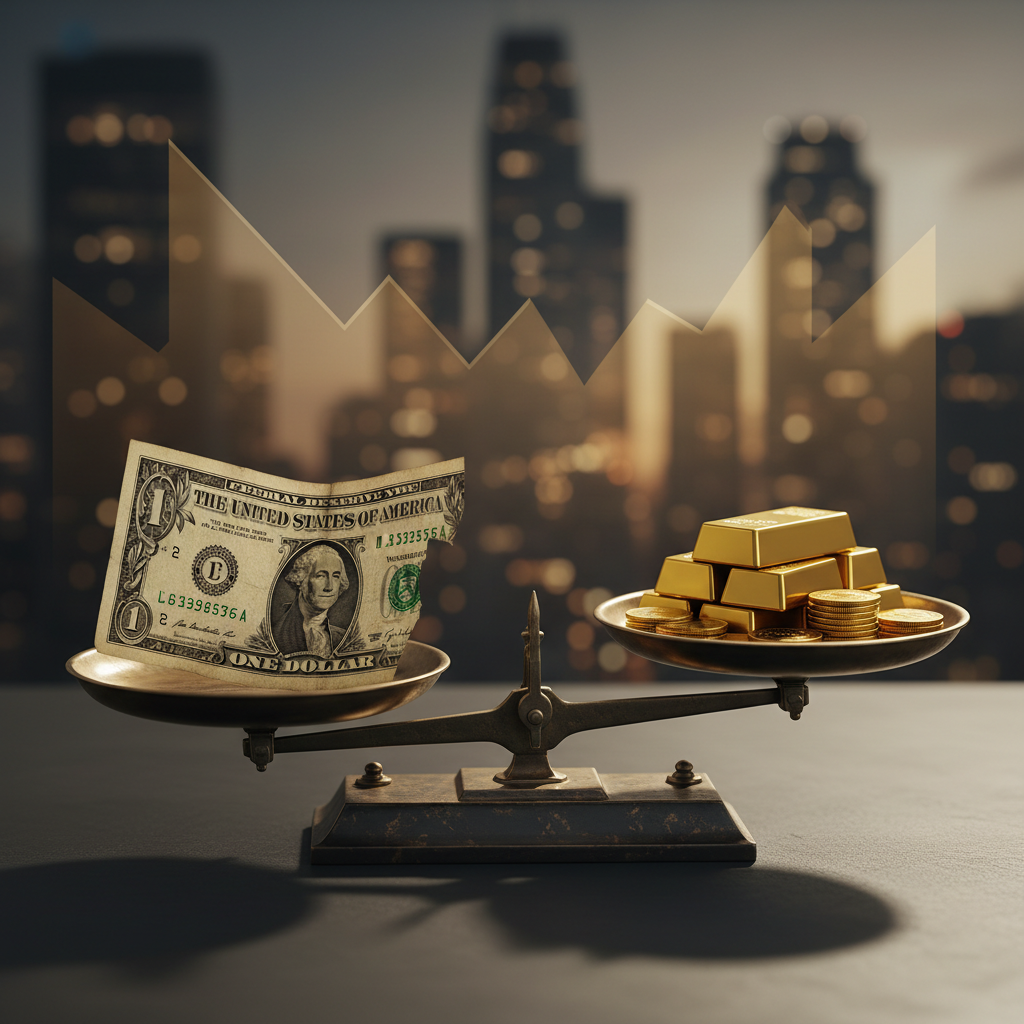
The Decaying U.S. Dollar: Why Gold Stability is Crucial for Your Financial Future
In an ever-evolving global financial landscape, the stability of national currencies is a paramount concern for investors. For those focused on wealth preservation, understanding the potential for U.S. Dollar decay is not merely an academic exercise; it is a critical component of strategic financial planning. The U.S. Dollar, long considered the world's reserve currency, faces a confluence of pressures that could impact its purchasing power and, by extension, the value of your assets. This article explores the factors contributing to dollar depreciation and highlights why the gold stability and other precious metals offer a compelling hedge against such risks.
TL;DR: Why Monitor the U.S. Dollar?
The U.S. Dollar's value is influenced by inflation, national debt, and global economic shifts. A weakening dollar erodes purchasing power and investment returns. Investment-grade precious metals like gold and silver offer a historical hedge against currency depreciation, providing a stable store of value to protect your financial future.
What Factors Contribute to the Decaying U.S. Dollar?
Several interconnected factors contribute to the potential for a decaying U.S. Dollar. Understanding these elements is essential for anticipating their impact on your investment portfolio and overall financial future.
Inflationary Pressures and Monetary Policy
One of the primary drivers of currency depreciation is inflation. When the supply of money increases faster than the production of goods and services, the purchasing power of each unit of currency declines. Recent years have seen significant monetary expansion by the Federal Reserve, particularly in response to economic crises. While intended to stimulate growth, such policies can lead to inflationary pressures. According to Federal Reserve data, the M2 money supply has grown significantly over the past decade, contributing to concerns about sustained inflation. This directly impacts the value of the U.S. Dollar.
Rising National Debt and Fiscal Policy
The burgeoning U.S. national debt is another significant concern. As of early 2026, the national debt continues to climb, raising questions about the long-term fiscal health of the nation. A high national debt can lead to increased interest payments, potentially crowding out other government spending and placing further strain on the economy. International investors may view a nation with a high and growing debt as less creditworthy, leading to reduced demand for its currency and government bonds. This diminished demand can directly contribute to a decaying U.S. Dollar.
Global Economic Shifts and Geopolitical Dynamics
The global economic landscape is constantly shifting, with emerging economies and geopolitical events playing an increasingly important role. The rise of alternative economic blocs and the diversification of international reserves away from the U.S. Dollar by some central banks can reduce its dominance. For instance, discussions around de-dollarization in certain trade agreements, though nascent, indicate a potential long-term trend. Such shifts, while gradual, can erode the dollar's status as the primary global reserve currency, impacting its value and the stability of your financial future.
How Does a Decaying U.S. Dollar Impact Your Wealth?
A decline in the value of the U.S. Dollar has tangible consequences for individuals and investors. It erodes purchasing power, makes imports more expensive, and can diminish the real returns on dollar-denominated investments.
Reduced Purchasing Power: The most direct effect is that your money simply buys less. Everyday goods and services, especially imported ones, become more expensive.
Lower Investment Returns: If your investments are primarily denominated in U.S. Dollars, their real value can decrease as the dollar loses strength. This is particularly true for fixed-income assets.
Inflationary Spiral: A weakening dollar can exacerbate inflation, creating a vicious cycle where rising prices further diminish the dollar's value.
Why is Gold Stability a Trusted Solution?
For centuries, gold has served as a reliable store of value, particularly during times of economic uncertainty and currency devaluation. Its intrinsic value is not tied to the policies of any single government or central bank, making it a powerful hedge against a decaying U.S. Dollar.
Historical Performance of Gold
Gold has a proven track record of maintaining its purchasing power over long periods. While its price can fluctuate in the short term, its long-term trend often correlates inversely with the strength of fiat currencies. Historically, gold has averaged annual returns that outpace inflation during periods of significant dollar weakness. This makes gold stability a cornerstone for preserving wealth.
Diversification and Portfolio Protection
Including physical precious metals like gold, silver, platinum, and palladium in your portfolio offers crucial diversification. These assets tend to perform independently of traditional financial instruments such as stocks and bonds. This non-correlation provides a buffer against market volatility and currency risks, enhancing the overall resilience of your financial future. Our expert advisors at American Standard Gold can help you integrate these assets effectively.
Tangible Asset with Intrinsic Value
Unlike fiat currency, which is essentially a promise backed by a government, physical gold is a tangible asset with intrinsic value. It cannot be printed or created at will, making its supply relatively finite. This scarcity contributes to its enduring value and its role as a safe haven during economic turmoil. Investors seeking true wealth preservation often turn to investment-grade gold and silver from authorized mints and LBMA-approved refiners.
How Can Precious Metals Safeguard Your Financial Future?
Beyond gold, other precious metals like silver, platinum, and palladium also offer significant benefits in protecting against currency depreciation and ensuring your financial future.
Silver: The Industrial and Monetary Metal
Silver shares many of gold's monetary characteristics, acting as a store of value, but also boasts significant industrial demand. Its dual role means it can benefit from both safe-haven buying and economic growth. This makes precious metals stability, particularly silver, a dynamic component of a diversified portfolio.
Platinum and Palladium: Strategic Industrial Assets
Platinum and palladium are critical components in various industrial applications, particularly in catalytic converters for automobiles. Their demand is closely tied to global manufacturing and environmental regulations. While more volatile than gold, their industrial utility provides a unique demand driver that can contribute to portfolio resilience. Investing in these metals requires careful consideration and expert advice.
Taking Action: Securing Your Assets with American Standard Gold
Understanding the risks associated with a decaying U.S. Dollar is the first step toward proactive wealth preservation. The next is to implement strategies that leverage the proven stability of precious metals.
American Standard Gold specializes in helping high-net-worth individuals, retirees, and families navigate these complex financial waters. We offer:
Gold & Silver IRAs: A tax-advantaged way to hold physical precious metals within your retirement accounts. Learn more about Precious Metals IRAs.
Physical Precious Metals: Direct ownership of investment-grade gold, silver, platinum, and palladium.
Portfolio Advisory: Our expert advisors provide personalized guidance tailored to your specific financial goals and risk tolerance. Discover our advisory process.
Sell-to-Us Program: A transparent and fair process if you ever decide to liquidate your precious metal holdings. Explore our sell-to-us program.
Protecting your financial future in an era of potential U.S. Dollar decay requires foresight and strategic action. By incorporating gold stability and other precious metals into your wealth preservation strategy, you can build a more resilient portfolio designed to withstand economic headwinds.
We invite you to schedule a complimentary consultation with one of our expert advisors to discuss how investment-grade precious metals can safeguard your assets. Call us today at (832) 210-1560 or email info@americanstandardgold.com.
Frequently Asked Questions About U.S. Dollar Decay and Gold Stability
What does "decaying U.S. Dollar" mean?
A "decaying U.S. Dollar" refers to a sustained decrease in the purchasing power or value of the U.S. Dollar relative to other currencies or goods and services. This can be caused by factors such as inflation, high national debt, or a loss of confidence in the U.S. economy. It means your dollar buys less over time, impacting your financial future.
How does inflation affect the U.S. Dollar's value?
Inflation directly erodes the value of the U.S. Dollar. When inflation is high, the cost of goods and services increases, meaning each dollar can purchase fewer items. This reduces the dollar's purchasing power and makes it less attractive as a store of value, contributing to its decay.
Why is gold considered a safe haven during dollar weakness?
Gold is considered a safe haven during dollar weakness because its value is not tied to any single government or currency. It has historically maintained its purchasing power during periods of economic instability and inflation, offering gold stability and acting as a reliable store of value when fiat currencies, like the U.S. Dollar, are depreciating.
Can precious metals truly protect my financial future from currency devaluation?
Yes, investment-grade precious metals like gold, silver, platinum, and palladium can significantly protect your financial future from currency devaluation. They act as a hedge against inflation and currency decay, preserving wealth by offering an alternative store of value that tends to appreciate when traditional currencies weaken. This diversification helps stabilize your overall portfolio.
Should I convert all my assets to gold to protect against U.S. Dollar decay?
While gold and precious metals offer significant protection against U.S. Dollar decay, it is generally not advisable to convert all your assets into them. A diversified portfolio is key to long-term financial security. Expert advisors recommend a balanced approach, where precious metals constitute a strategic portion of your overall investment strategy, rather than being the sole component. A complimentary consultation with American Standard Gold can help determine the right allocation for your specific needs.