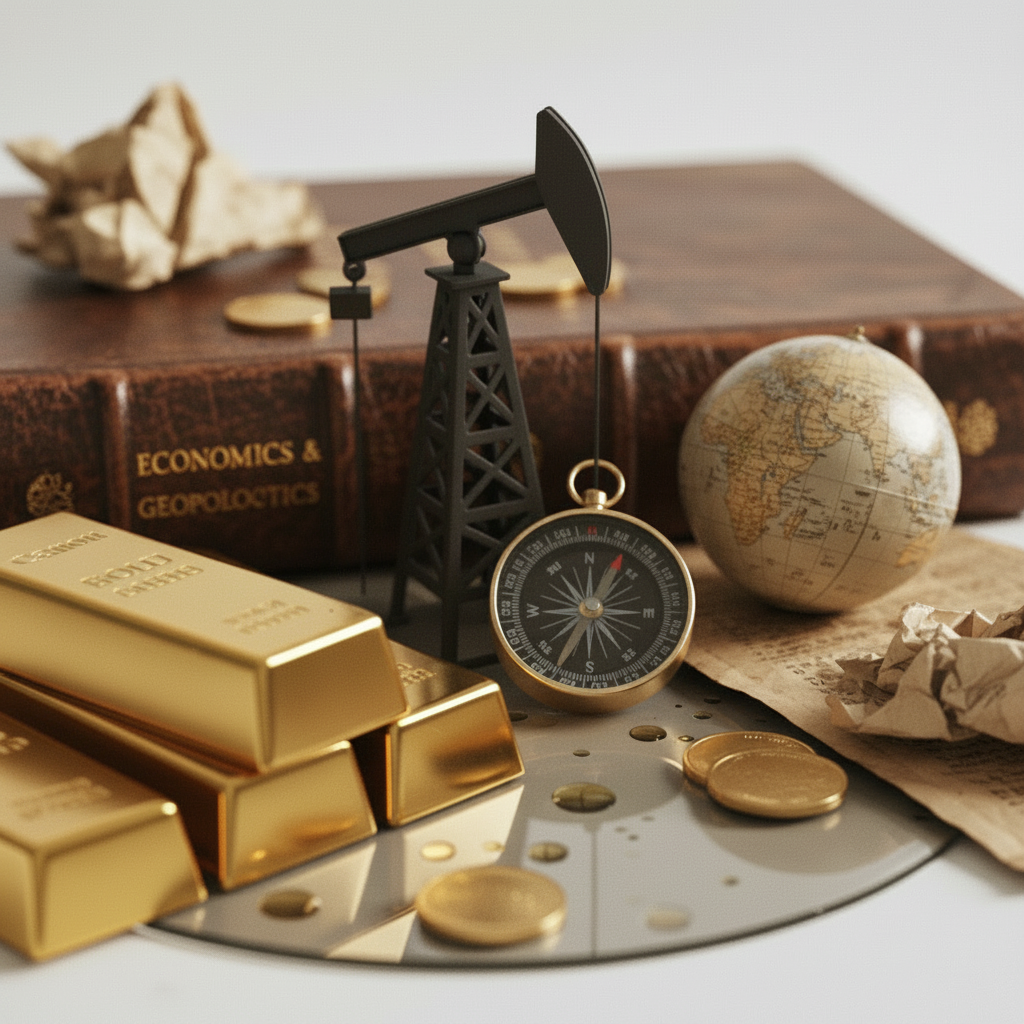
Will Rising Oil Prices Impact Gold? Economics & Wartime Analysis
Will rising oil prices impact gold? This is one of the most critical questions facing modern investors navigating an era of persistent geopolitical friction, supply chain volatility, and macroeconomic uncertainty. When crude energy markets surge, ripple effects spread immediately across global financial landscapes. Understanding the intricate mechanics connecting energy commodities, sovereign monetary policy, and hard assets is essential for preserving generational wealth.
Historically, the intersection of energy spikes and safe-haven assets has provided a reliable blueprint for sophisticated investors. Whether examining the oil shocks of the 1970s or contemporary supply shocks driven by regional conflicts, the correlation between energy inflation and precious metals requires careful portfolio navigation. According to data compiled by the World Gold Council, periods of high energy-driven inflation frequently trigger defensive capital rotations into tangible assets.
As global markets face ongoing pressures, examining the historical and economic ties between petroleum and bullion offers vital perspective. By partnering with an expert advisor at American Standard Gold, investors can develop resilient strategies designed to withstand inflationary shocks and currency devaluation.
TL;DR: The Core Connection Between Crude and Metals
While oil and gold belong to distinct commodity classes, they share a profound sensitivity to systemic risk, currency fluctuations, and geopolitical instability. When crude markets experience dramatic upward pressure, several structural economic mechanisms typically link energy costs directly to gold valuations:
Inflationary Feedback Loops: Higher energy costs increase the expenses associated with mining, refining, and transporting precious metals, creating an economic floor for production.
Safe-Haven Demand: Spikes in petroleum often stem from broader macroeconomic instability, wartime escalation, or supply blockades, driving investors toward safe havens.
Currency Devaluation: Energy is globally priced in US dollars; a weaker dollar resulting from high energy import burdens often enhances bullion appeal internationally.
Central Bank Monetary Policy: Energy-induced inflation forces central banks into difficult policy dilemmas, frequently leading to negative real interest rates that favor non-yielding assets.
How Do Wartime Economics Influence Oil and Gold?
Geopolitical conflict represents one of the most volatile catalysts for global financial systems. During periods of wartime, physical infrastructure, shipping lanes, and extraction facilities face immediate disruption. Consequently, oil prices tend to skyrocket almost instantly upon the outbreak or escalation of military hostilities in critical oil-producing regions like the Middle East or Eastern Europe.
Simultaneously, traditional financial assets—such as equities and corporate bonds—frequently experience severe downward corrections due to heightened systemic risk. This divergence creates a classic flight to safety where gold prices surge alongside energy. Federal Reserve economic data frequently highlights how sudden commodity shocks compress consumer purchasing power, elevating gold as the ultimate store of value.
"During systemic geopolitical crises, energy markets dictate short-term industrial costs, while precious metals absorb the long-term systemic fear of currency debasement and sovereign instability."
For investors looking to fortify their holdings against such shocks, exploring why invest in precious metals provides fundamental insights into long-term wealth preservation. Integrating physical assets into a diversified portfolio ensures that sudden macroeconomic shifts do not erode purchasing power.
The Direct Economic Mechanics: Energy Costs and Mining Production
Beyond market psychology and safe-haven demand, tangible economic fundamentals bind petroleum to bullion extraction. Commercial mining operations are intensely energy-dependent. Heavy machinery, underground ventilation systems, ore transport fleets, and smelting facilities rely heavily on diesel fuel and electrical grids powered by fossil fuels.
When oil prices climb precipitously, the all-in sustaining costs (AISC) for global mining firms rise in tandem. If energy expenses outpace spot market gains temporarily, marginal producers may curtail output, leading to tighter physical supply constraints. This dynamic reinforces the intrinsic value of investment-grade gold and silver, as replacement costs for newly mined metal increase.
To safeguard retirement portfolios against these production and inflationary pressures, many individuals leverage a Gold & Silver IRA. Establishing a tax-advantaged vehicle backed by physical metal from authorized mints and LBMA-approved refiners provides a durable shield against energy-driven cost-push inflation.
Historical Precedents: What Past Crises Reveal
Examining historical precedents clarifies the relationship between energy shocks and precious metals performance. During the 1973 oil embargo orchestrated by OPEC, oil prices quadrupled within a matter of months. This sudden shock triggered severe stagflation across Western economies, characterized by stagnant growth and soaring consumer prices.
During this same window, gold transitioned from a fixed government peg to a free-floating market asset, appreciating dramatically as investors sought refuge from collapsing fiat purchasing power. A similar dynamic unfolded during the 1979 Iranian Revolution, where energy supply disruptions coincided with massive multi-year rallies in both gold and silver.
The table below summarizes key economic indicators during major historical energy shocks:
Historical Event | Oil Price Impact | Gold Price Response | Primary Economic Driver |
|---|---|---|---|
1973 OPEC Embargo | Up over 300% | Significant multi-year surge | Stagflation, supply embargo |
1979 Iranian Revolution | More than doubled | Record highs reached in 1980 | Geopolitical conflict, inflation |
2022 Eastern European Conflict | Sharp intraday spikes | Tested historic highs | Sanctions, supply chain panic |
To acquire specific physical assets that align with historical safe-haven standards, reviewing our comprehensive product catalog allows investors to select sovereign-minted bullion suited to their exact portfolio specifications.
Navigating Modern Geopolitical Volatility
In the contemporary global economy, the correlation between energy volatility and bullion strength remains robust, though mediated by algorithmic trading, central bank reserve policies, and digital financial derivatives. Nevertheless, when physical supply chains face existential threats from active conflict zones, paper derivatives frequently decouple from physical delivery realities.
Investors who recognize these cyclical vulnerabilities often choose to rebalance their asset allocation proactively. Whether managing an existing portfolio or exploring liquidation options through our transparent sell-to-us program, maintaining liquidity in tangible assets remains a hallmark of prudent wealth management.
For tailored guidance tailored to your specific financial objectives, we invite you to schedule a complimentary consultation with our team of specialists.
Frequently Asked Questions
Will rising oil prices always cause gold prices to rise?
Not automatically, but there is a strong historical correlation driven by inflation and safe-haven demand. While energy spikes increase mining production costs and fuel broader inflation—which typically boosts gold—central bank interest rate hikes in response to energy inflation can sometimes create temporary headwinds for non-yielding bullion.
How does war impact the relationship between oil and precious metals?
Wartime conditions simultaneously disrupt energy infrastructure and trigger widespread market anxiety. This dual pressure causes oil prices to spike due to perceived supply shortages, while simultaneously driving investors toward gold as the ultimate defensive asset during geopolitical instability.
Are mining production costs directly tied to global oil prices?
Yes. Commercial gold and silver extraction is highly energy-intensive, relying heavily on diesel fuel for heavy machinery, transport trucks, and on-site power generation. When crude prices surge, operating expenses for mining companies increase, which can impact global supply and support higher market valuations.
How can investors protect their portfolios against energy-driven inflation?
Investors frequently utilize physical precious metals, such as gold and silver bars or sovereign coins, to hedge against energy-driven inflation and currency devaluation. Allocating a portion of wealth through a dedicated Gold IRA or direct physical holding helps preserve purchasing power during macroeconomic shocks.